
Health Equity Index and 2027 Star Ratings
BLOG
For a plan preparing for 2027, the natural places to apply that discipline are the streams already tied to scored measures: redetermination outreach, annual enrollment materials, care-gap campaigns, and call-center language support.
Health plan leaders have known for three years that the Health Equity Index changes Star Ratings math, yet most plans are underweighting the one input that touches every member. The investments show it: social-needs data platforms, community partnerships, care-management expansion. All are real levers.
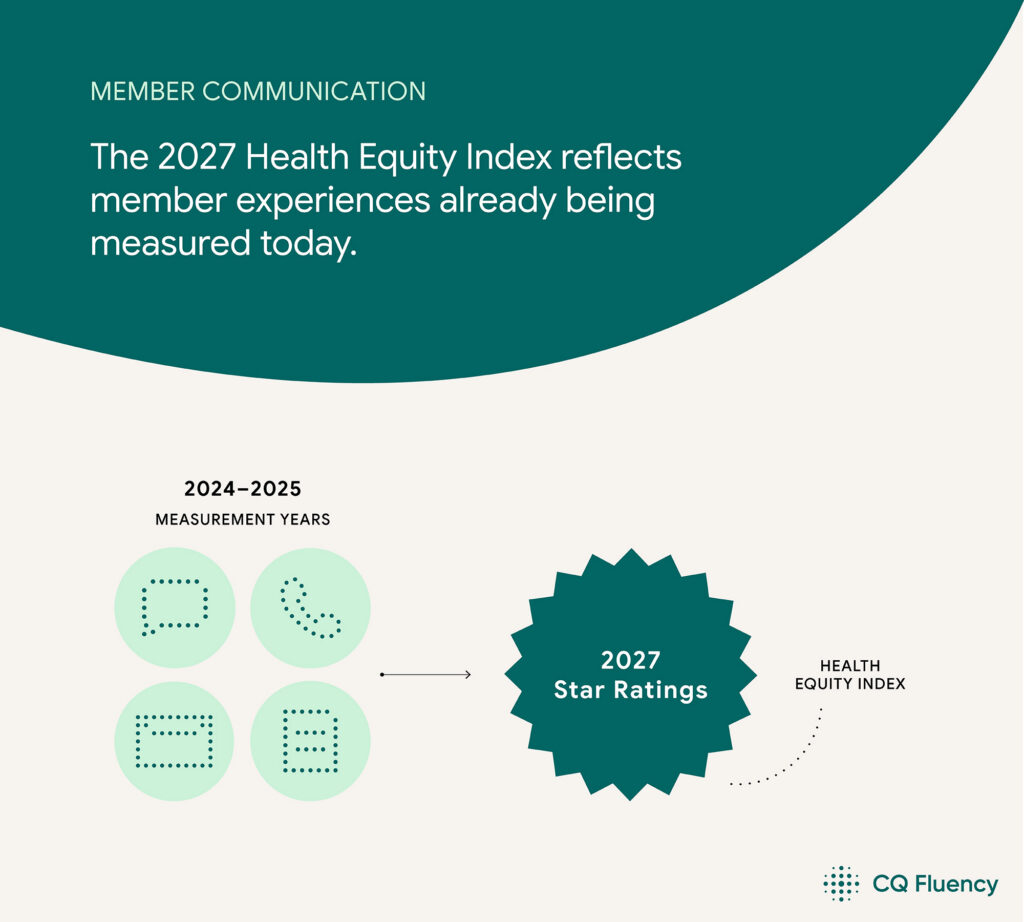
The first HEI-adjusted payments arrive with the 2027 Star Ratings, based on performance already being measured. One input runs through every scored measure, for every member with a social risk factor, in every quarter of that window: whether the member understood the communication your plan sent well enough to act on it.
It’s the input most plans have already marked “handled.”
What the Health Equity Index actually changes
CMS finalized the Health Equity Index in 2023 as a replacement for the existing reward factor in the Star Ratings program. Instead of rewarding high performance across the board, the HEI rewards plans for how well they serve enrollees with social risk factors, including dual eligibility and low-income subsidy status. Performance in the 2024 and 2025 measurement years feeds the 2027 Star Ratings.
The stakes aren’t abstract. Plans that reach 4 stars or higher earn a 5% quality bonus payment; the pool was worth roughly $11.8 billion across Medicare Advantage in 2024. For plans with high dual-eligible and limited English proficient (LEP) enrollment, the HEI converts a mission statement into a revenue line: how your hardest-to-reach members experience your plan now moves your bonus.
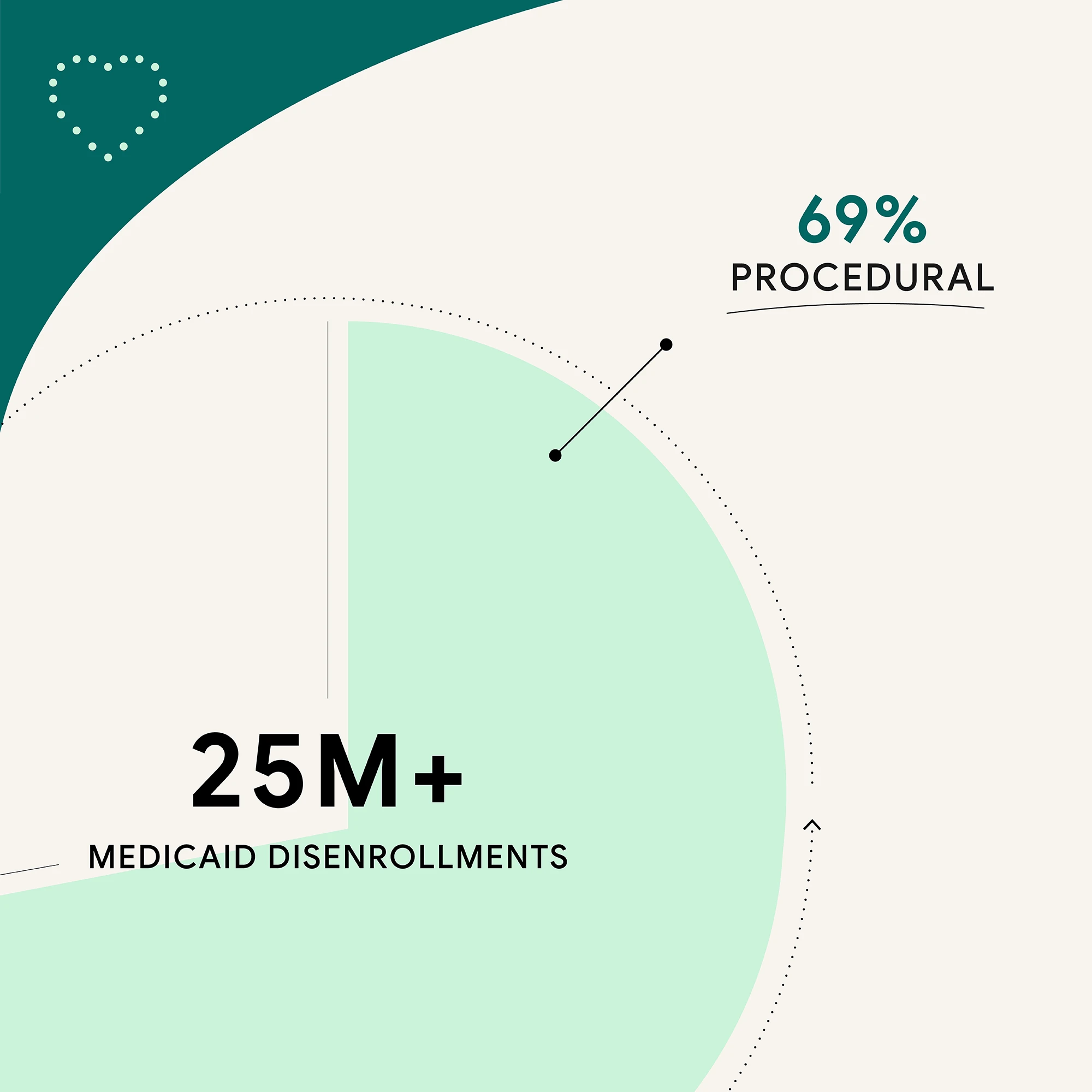
Around 5.2 million dual-eligible individuals are enrolled in D-SNPs, and separate 2027 rules will require many of those plans to manage large enrollment transitions. These mandatory, high-stakes member communication events land in the same window the HEI starts paying.
Why communication is now a scored input
The path from a member communication to a Star Rating is short and well documented.
A member who understands an annual notice acts on it before the window closes. A member who understands discharge instructions follows them. A member who can explain a problem to a call center gets it solved instead of filing a grievance. Each of those actions, or their absence, lands in CAHPS scores, HEDIS gaps, adherence measures, complaint counts, and retention. Those are the measures the HEI weighs for members with social risk factors.
Peer-reviewed research supports the mechanism: a systematic review in the Journal of General Internal Medicine linked patient–clinician language concordance to measurable differences in quality of care and outcomes. What looks like member disengagement is very often member misunderstanding.
Regulation has caught up with the same idea. The Section 1557 final rule requires covered organizations to provide notices of free language assistance in each state’s top 15 languages. It goes beyond availability: it prohibits reliance on low-quality video interpreting and unqualified translators. The floor is no longer “did you translate it?” It’s moving toward “was it competently done?”
The gap most plans leave open
Here’s the uncomfortable pattern in the industry’s own numbers. In one survey of more than 450 payer executives, 59% named health equity their top member-engagement priority. Yet in a separate survey of healthcare leaders, 43.5% reported having no roadmap to address equity across their organization, and 48.3% didn’t know whether they even held race, ethnicity, or language data on the populations they serve.
The priority is funded. The lever is misplaced. Equity budgets flow to dashboards, analytics, and consulting engagements, while member communication sits in procurement as a solved, per-word commodity, bought on turnaround time and error rate and never measured against a quality score.
Meanwhile, the communications themselves keep failing quietly. Materials written at a 12th-grade reading level go to populations whose average health literacy is far below that level. Notices that are linguistically accurate arrive culturally unfamiliar and get set aside. The document was delivered. The member never acted. No one measured the difference.
Translation gets the words right. That’s not the same as understood.
This distinction matters: language access and understanding are different goals.
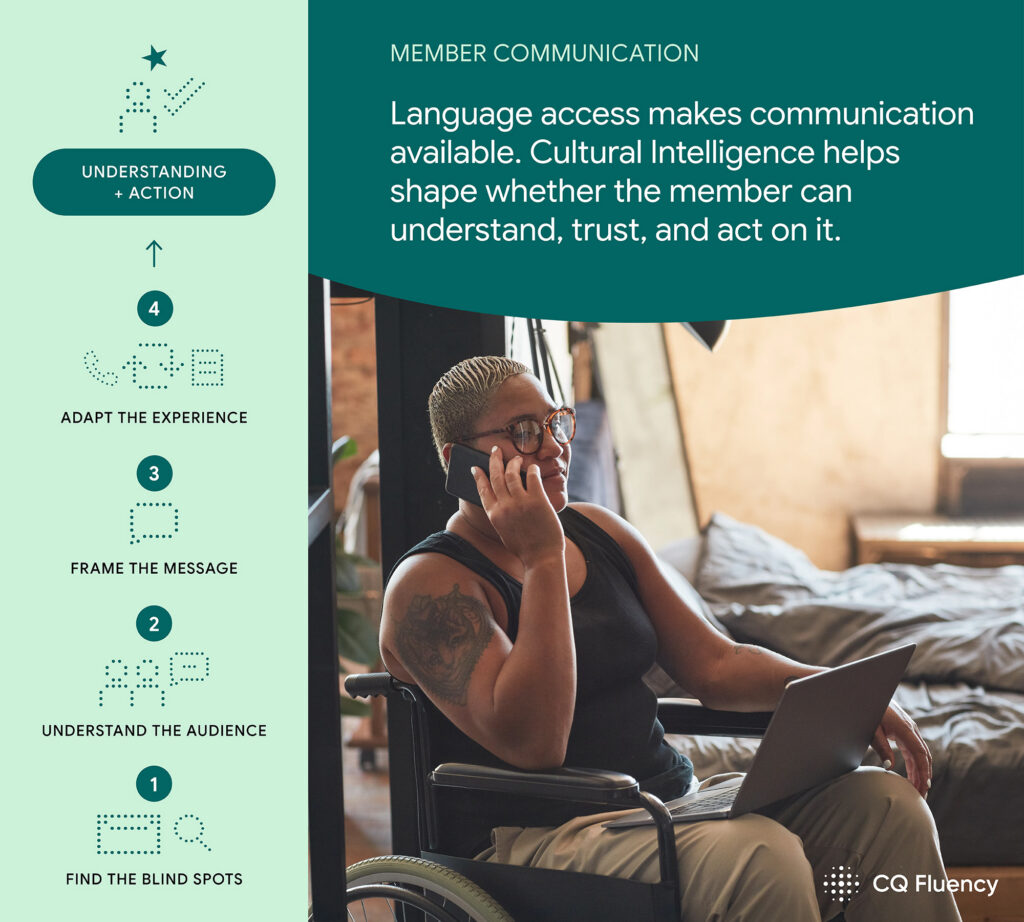
Language access asks whether information was made available in a member’s language. It’s necessary, regulated, and increasingly automated. Understanding asks whether the member could interpret, trust, and act on it. That depends on reading level, cultural context, how a given community makes decisions, and whether the format matches how people actually process information.
Cultural Intelligence (CQ) is the discipline built for that second question: the study of how people interpret, trust, and act on information across cultural contexts. Applied to member communications, it works in four moves: surfacing cultural blind spots in the source content before anything is translated, mapping how the target population actually thinks and decides, framing the message so it motivates action rather than merely informing, and adapting tone, format, and delivery so the message lands as intended.
None of that replaces translation. It’s the layer that determines whether translation produces an outcome.
What measurable understanding looks like
The practical shift is from activity metrics to outcome evidence: assess a communication stream before rebuilding it, redesign it against the population’s literacy and cultural patterns, then measure the change in the metric the plan is paid on.
The effect can be large. In one published case, a colon-cancer screening campaign adapted with cultural insights for an intercultural population of men over 50 returned home-screening kits at a rate 32% higher than the U.S. Colon Cancer Screening Program benchmark. Same clinical ask. Different understanding. Different behavior.
Five questions to ask before the 2027 ratings land
- Which scored measures move most among our LEP and social-risk members? That’s where the HEI weighting will bite, and where communication changes pay fastest.
- What reading level are our materials written at, and at what level do our members read? If no one can answer, that’s the finding.
- Have our highest-stakes communications ever been tested with the populations receiving them, or only reviewed for linguistic accuracy?
- Does our language vendor report outcomes or word counts? A partner accountable for understanding should be able to show a metric that moved.
- Which mandatory communication events hit before 2027 (redeterminations, D-SNP enrollment transitions, AEP), and is each one designed to be understood, or only to be compliant?
Frequently asked questions
When does the Health Equity Index take effect? The HEI reward applies beginning with the 2027 Star Ratings, calculated from performance in the 2024 and 2025 measurement years. It replaces the prior reward factor.
Does Section 1557 allow machine translation of member materials? The final rule sets quality expectations: it requires qualified translators and interpreters and prohibits reliance on low-quality video remote interpreting. Machine output without qualified human accountability is a compliance risk, not a shortcut.
What’s the difference between language access and cultural adaptation? Language access makes information available in a member’s language. Cultural adaptation redesigns the message: reading level, framing, imagery, and format, so a specific population can understand, trust, and act on it. Access is the regulatory floor; understanding is what moves quality measures.
CQ Fluency builds culturally intelligent communications for health plans, designed to be understood by every member population and measured in the plan’s own quality metrics. If you want to know where your communications stand before the 2027 cycle, start with one stream and one number:
Sources
- CMS / KFF: Health Equity Index final rule and Star Ratings methodology; D-SNP enrollment (5.2M, 2023)
- LanguageLine industry analysis: 4+ Star bonus value (≈$11.8B MA quality bonus payments, 2024)
- HHS OCR / Morgan Lewis: Section 1557 final rule: 15-language notice requirement; translator and interpreting quality provisions
- Milliman: 2026 D-SNP landscape; 2027 aligned-enrollment rules
- HealthEdge Annual Payer Market Planning Report 2025: 59% equity priority (450+ executives)
- Vantage Health Technologies survey: 43.5% no equity roadmap; 48.3% lacking race/ethnicity/language data
- Diamond et al., Journal of General Internal Medicine: systematic review, language concordance and care outcomes
- CQ Fluency published case study: colon-cancer screening campaign, 32% above program benchmark